18/05/2017
The global steel market continues to be assessed as having many potential risks of trade conflicts from the following policies: – The US-China trade conflict and its ongoing consequences and arising from Section 232 taxes continue to surround the global steel market. – Impact of 25% US import tax and ongoing environmental protection measures in China. - The European Commission said that retaliatory measures on US products in response to US steel and aluminum tariffs took effect on June 22. – China's finished steel exports in May increased for the fourth consecutive month. – The short-term outlook of the global long steel market is expected to stabilize in the near-term as uncertainty regarding steel tax measures persists.
In June, many markets kept the waiting sentiment. In China, June is a seasonally slower time for steel demand and market participants are uncertain about the impact of US import duties and ongoing environmental protection measures in China. China.
Despite continuing to control and regulate steel production in China for environmental reasons, steel production continues to increase. Output in the first five months of 2018 increased by 5.4% year-on-year to 369.86 million tons. Steel prices and high profits continue to encourage new steel production facilities with about 33.52 million tons/year of new hot-rolling capacity coming into operation this year, Platts calculated.
China's finished steel exports in May rose for a fourth consecutive month to 6.83 million tonnes, up 6% month-on-month and the highest since July 2017. Despite the strong increase in output and the return of exports, most steel producers do not expect their average annual exports to surpass 75 million tons last year. End-user demand is expected to decline slightly year-on-year, but not enough to lead to an increase in exports.
Prospects
U.S. hot-rolled coil offers rose to $930/ton and domestic traders and service centers believe prices could rise further in the coming weeks as mills are encouraged by Section 232 import duties to raise prices further. Lack of import competition from Canada and Mexico could reduce available supply and further support prices.
China's domestic rebar prices fluctuated in early June, reacting like steel futures, which had been spooked by the trade war between China and the US. Going into the hot and rainy summer months, the demand for rebar may decrease more. These two factors combined should keep rebar prices down in the coming weeks. Asia's import rebar prices will follow China's and the summer will also affect major buying markets such as Hong Kong and Vietnam.
China's hot-rolled coil price has stabilized recently but is also subject to the same concerns about international trade conflicts as rebar. End-user demand remains strong, and domestic prices will remain around current levels. In export markets, China offers stood at $595-610/ton FOB in mid-June but this is considered too high for most major buyers. With relatively strong domestic demand and high prices, Chinese mills will not be inclined to reduce their export offers too much.
In Europe, Platts rates HRC Southern Europe at Eur514/ton, while HRC Nordic at Eur561.5/ton ex-Ruhr in the second week of June.
In the scrap market, Turkish mills have shown increased buying interest in recent weeks due to low inventories and expectations of stronger sales to the US and Europe. This led to a flurry of recent deals out of the Baltic, Europe and the US at prices higher than in previous weeks.
Sea rail ore traded in a narrow range at around $64-66/ton CFR in the first half of June. The market does not seem to benefit from high steel prices and good margins in China. Abundant supply, high port stocks, cuts in steel production for environmental reasons, and a weak steel demand season, could combine to drive iron ore prices down slightly next month.
A potentially 25% tariff on the volume of US coking coal sold to China could have long-term effects for most Chinese buyers. The coking coal market in Asia trades on the sidelines as buyers probe trends before buying. High-quality coking coal is at around $200/ton FOB Australia and could hold around this level next month with US-China trade tensions making the market volatile.
Long products (Long products)
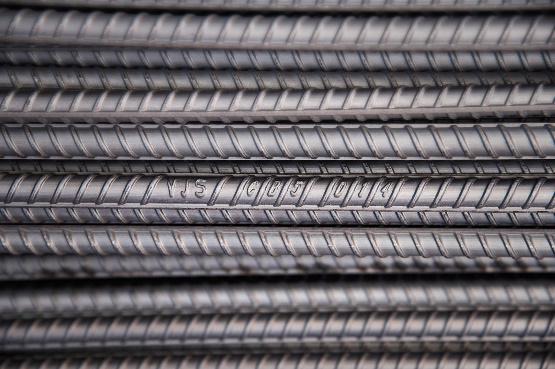
China's rebar market sentiment rebounded in the second week of June after being mostly bleak at the beginning of the month. The rebar market responds to futures prices, which in turn responds positively to reduced inventories and production controls based on stricter environmental measures. This has happened although June is usually a weaker month due to the hot and rainy summer weather in China.
On June 14, Platts assessed the BS500 16-20mm diameter rebar at $557/ton FOB China, up $2/ton from the previous day. Most Chinese mills stopped quoting, although some offered at $550/ton FOB for July shipments.
In Turkey, the export price of rebar recovered in June, reaching $548/ton FOB on June 13, up $3/ton from the previous day.
Market sources said sentiment has improved as the possibility of selling rebar into the EU and US prompts long steel producers to raise prices.
Turkey's rebar exports in April hit their lowest level since the beginning of the year as purchases in key export markets continued to decline amid trade barriers and low demand.
Exporters have been trying to focus on alternative markets in Southeast Asia and even the Caribbean to offset the decline. The steepest drop was seen in exports to the US in April, when Section 232 duties restricted Turkish exports to that country. Turkish mills exported 13,540 tons of rebar to the US in April, down sharply from 141,900 tons exported in the same period last year. This export figure is also 85% lower than the previous month.
The short-term outlook of the global long steel market is expected to stabilize in the near-term as uncertainty regarding steel tax measures persists. Following the US tariffs imposed on steel imports from Canada, Mexico and the EU from June 1, the major steel markets are now facing more equal trading conditions providing stability. Rising domestic rebar prices in the US could push scrap prices and support a global recovery in long product prices due to higher production costs for Turkish and European mills.
Steel coils (Coils)
There is quite a bit of divergence in the coil market dynamics globally, with the US enjoying strong upside momentum, Europe on the stand-by mode, while China holding firm amid trend uncertainty. price direction.
In the US, hot rolled coil price touched $900/ton, while cold rolled coil price reached $1,011/ton in June. Many people in the US market think that plate price will increase in the near future due to the remaining supply. tight and mills are likely to push the offer higher. Prices are falling after three months of stability but mills are expected to see an opportunity to increase spot prices in the coming weeks.
The Chinese market is stable, it is entering a weak seasonal time of the year but flat steel prices should hold more firmly than long steel. Fundamentals are found to be quite strong and demand is expected to remain strong in the near term.
In mid-June, the Asia HRC spot price was flat as buyers and sellers were largely reluctant to pay the high prices demanded by Chinese sellers. Platts assessed HRC SS400 3mm thick at $593/ton FOB China on June 14. On a CFR Southeast Asia basis, coil of the same grade is valued at $605/ton. Transactions were reported for China commercial grade steel coil at $595/ton FOB for August shipment and for similar grade at $600-605/ton FOB China.
China's manufacturing sector surged in May, with new orders and improved production from the previous month, although companies reported increased input costs from raw materials, including steel.
In the US, manufacturers of CRC and coated steel have requested the US Department of Commerce to investigate the importation of such products from Korea, which is finished in Vietnam, allegedly evading anti-dumping duties. prices and anti-subsidy.
Scrap and Raw Materials
Scrap import prices showed positive signs in mid-June, touching $350/ton CFR Turkey for the first time since the middle of last month. Turkish import mills are said to have found some optimism from rebar sales into the US. This promotes the situation that rebar trade can be found in the US and Europe and leads to the addition of scrap warehouses.
During the second week of June, Turkish factories signed a series of agreements with US sellers, after North American suppliers were absent from the market for the previous two weeks. Turkish buyers were unwilling to accept higher offers in the United States and Canada.
Following the recent US steel tariffs imposed on the EU, Canada and Mexico, a more positive outlook for finished steel sales in Turkey combined with reduced steel inventories at mills has brought Buyers return to the negotiating table, causing them to accept a higher price.
Iron ore market trades sideways
Spot iron ore market traded at a narrow range of $64-66/ton CFR in the first half of June. Platts assessed that the benchmark price of 62% Fe bran ore averaged $65.95/ton in May, up just 1. 04% from last month. Sea-borne iron ore is unlikely to benefit from high steel prices and good margins in China. Abundant supplies, high terminal inventories, environmental cuts in steel production, and a weak season in steel demand, could combine to drive iron ore prices down slightly next month.
Despite high port inventories, China's demand for marine raw materials remains strong, with May imports up 13.5% from April to 94.14 million tonnes.
Iron ore exports from the five major miners (Rio Tinto, BHP, Vale, FMG and Roy Hill) in the first quarter showed a slower pace to the 2018 production outlook, but seasonality is coming and the Q2 shipments will increase.
Metallurgical coal returns to $200/ton but demand plummets
The Asian metallurgical coal market rallied strongly in the first half of June, with high-quality coal rebounding to $200/ton FOB Australia for the first time since March.
In China, sellers are not actively making offers as they expect prices to rise, driven by sharp increases in steel and coke prices. "Nobody is really short of raw materials and there's a lot of stock available so demand isn't very strong," said a major steel producer in northern China.
Platts rating high quality metallurgical coal increased $3.75/ton from the previous week to $205/ton FOB Australia on June 14, while China CFR price remained unchanged from last week at $205.50 /ton CFR China. With prices now back above $200/ton CFR China, end users may not want to replenish stock and need time to accept current prices, sources said.
Steel Plate (Plate)
While steel plate prices in June in the US and Asia benefited from tight supply, the uncertainty choked the European market.
Asian plate prices in mid-June continued to increase due to tight supply, touching multi-year highs. The market continued to increase due to increased demand in Korea. Most Chinese mills raised their export offers for sheet steel by $5-10/ton on June 20, reaching $630-640/ton FOB China.
A Shanghai-based steel trader said good demand from shipbuilders since the start of this year, thanks to a recovery in the shipbuilding industry, will support the plate market.
Domestic steel plate prices in the US continued to increase because the availability of goods at factories was still scarce. Overall, the mill's asking price was around $960/ton in the week of June 22.
About production
World crude steel production in May increased by 6.6% year-on-year to 154.9 million tons, according to data from the World Steel Association. Output in the first 5 months of the year reached 729 million tons, up 4.3% over the same period.
Along with the upward trend in steel production, capacity utilization increased to 77.7%, the highest level since April 2013 when it stood at 80%. The May level increased by 4.2% compared to May 2017.
The increase in global steel production was once again led by China, which contributed 81.1 million tons in May, up 8.9% year-on-year.
EU production increased by 1.8% year-on-year to 15 million tons. Production in Germany – the largest producer in the region – reached 3.9 million tons, up 2.6% year-on-year.
North America posted production growth of 4.3% to more than 10 million tons in May, Canada and Mexico increased 14.3% and 3.4% respectively, and US production increased 3% to 7.1 million tons. .
China's crude steel output continues to soar
China's crude steel production spiked in May, reaching 955 million tons on an annualized basis, up 14.9% from 832 million tons in 2017, according to Platts calculations based on data from the Bureau of Statistics. National Statistics.
However, most market sources think that China's steel output in June will cool down a bit due to regular nationwide environmental protection testing, mainly from June.
After restricting output by 30-50% from late May to early June at steel mills within 300 km from Qingdao in eastern China for the Shanghai Cooperation Organization Summit, China has launched a nationwide environmental inspection from June 11, 2018 to April 28, 2019.
In an effort to meet the standards required by the inspectors, Zhenjiang, Changzhou and Zhangjiagang of Jiangsu province ordered local factories to limit production to 50% at blast furnaces or sintering plants. between June 11-24, while Tangshan, Hebei province ordered production cuts for sintering and Shijiazhuang for coke smelting.
(Sbb June 2018)